A Grey Morning Wardrobe Color Exercise With Clothes You Own
A grey morning wardrobe color exercise helps you see how one small change shifts a familiar outfit, so you can choose what to wear with more intention.
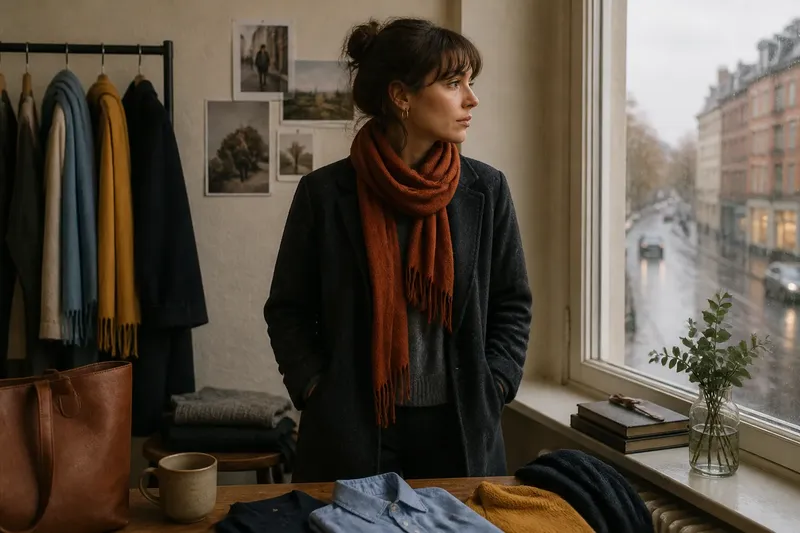
A rust scarf can make a navy coat feel warmer on a gray morning. A pale blue shirt can make the same coat seem sharper. This grey morning wardrobe color exercise helps you observe those relationships with clothes you already own, rather than treating seasonal dressing as a reason to shop.
The point is not to discover a perfect palette or assign yourself a season. Notice what one color changes nearby: what recedes, what comes forward, and what feels different in the light where you get dressed.
What cloudy light reveals
Overcast daylight softens contrast and can make familiar shades seem quieter or cooler than they do under indoor bulbs. A vivid garment may sit gently beside a charcoal coat outdoors, while muted green can look nearly gray.
Pause near a window before leaving and look at the outfit as a group. Notice which color catches your eye first, where your gaze moves next, and whether one piece connects the others or interrupts them.
This is observation, not a verdict. An unexpected combination is not automatically wrong; the useful question is what the colors do together and whether that effect suits your day.
Choose one small accent
Start with an accessory or visible layer you already own: a scarf, knit collar, belt, bag, socks, or shirt beneath an open jacket. Choose a color outside your usual rotation but comfortable enough to wear through an ordinary morning.
Change one thing at a time. If you add a rust scarf, bright bag, and patterned shoes together, it becomes harder to tell which detail changed the outfit’s mood. A single adjustment gives you a clearer comparison.
Use something clean and easy to reach, not a piece you have been saving for a special occasion. The aim is to see how a small color shift works in everyday clothes.
Color beside familiar clothes
A color near the face can alter how a coat, sweater, or shirt reads without changing its cut or condition. A warm accent may make cool neutrals feel less severe; a crisp, cool accent can make earthy brown or olive seem more defined. These are relationships, not rules about which shades belong together.
Compare the same base outfit with two accents. A navy coat over a gray sweater might feel calm with a soft blue scarf and more grounded with a brick-red one. Keep everything else steady and notice how the coat seems to shift in character.
Scale and placement matter as well as hue. A narrow strip at the neckline may read as a quiet note, while a large scarf can become the main event.
What should you look for?
Start with three observations: the outfit’s overall warmth or coolness, its strongest contrast, and the place your eye lands. You do not need specialist terms; “more golden,” “a little icy,” or “less flat” are precise enough when they describe what you see.
Then notice whether the accent connects to another part of the outfit. A burgundy scarf might echo a subtle shirt stripe, or stand alone against solid gray. Either can work; the choice is between a linked impression and a more noticeable interruption.
Look from a few steps away, too. Close up, knit texture or a tiny pattern can dominate; at a distance, the same item may read as one broad block of color. A mirror across the room can help you judge the larger relationship.
Does lighting change the colors?
Why does a shade look different indoors?
Daylight, warm household bulbs, and fluorescent office lighting can make the same garment appear different. A muted violet may look clearer by a window, while cream can seem more yellow under a warm lamp.
What if you dress before sunrise?
Make the comparison where you normally get dressed, then check again near a window later. You are not trying to make the outfit match every setting; you are noticing which colors remain legible to you and which depend on particular light.
Can a phone photo record the color?
Phone cameras can shift color through automatic exposure and screen settings. Use a photograph as a reminder of the arrangement, not an exact record of hue; your own view in the room is the more useful reference.
Compare two combinations
Keep one base outfit constant and change only the accent. Look at the coat, the area near your face, and the overall contrast each time. If the comparison feels muddled, remove a visible pattern or color rather than adding more.
Imagine you reach for a charcoal sweater, black trousers, and a familiar dark coat on a drizzly morning. You add a muted yellow scarf and notice that the dark pieces seem less formal and your gaze settles near your face; then you swap it for a blue-gray scarf and the outfit feels more continuous. The result is a choice between those effects, not a verdict that one scarf is better.
When an accent feels wrong
Treat discomfort as information, not a command to discard the garment. Ask whether the color itself bothers you, its visible area feels too large, or its placement feels unfamiliar. Moving a scarf from your neck to a bag handle changes its relationship to your face and the rest of the outfit.
A familiar neutral can soften a strong contrast. An open gray cardigan over a bright shirt may make the shirt feel less abrupt; a dark belt can separate a patterned top from contrasting trousers. If an accent distracts you during work or travel, choose the familiar version instead.
Keep the observation useful
Write a brief note in a pocket notebook or your phone’s Notes app: base outfit, accent color, lighting, and one phrase about the effect. “Gray coat, rust scarf, cloudy window light; warmer, more focused” is enough to remember a combination you liked without turning the note into a shopping list.
Descriptive words are more useful than ranking every outfit. “The scarf pulled attention upward” tells you something you can apply; “good” or “bad” does not explain why. If you would rather not write, make a mental note and move on.
A grey morning wardrobe color exercise can help you choose which existing piece gives an outfit the tone you want today. Before deciding that you need something new, try moving or swapping one small color and look again in the light you will actually step into.